

History of Estepona
What the guides leave out.
Street names with a story. People who made the city. Episodes that guidebooks omit because they don't fit on a tourist leaflet.
Places that hide a story
Places you see without knowing what lies behind them.
17th Century
Calle Murillo
A 17th-century doctor who treated Estepona's epidemics, sailed to Málaga and ended up imprisoned in Algiers for thirteen years. This street bears his name.
Read the story1831
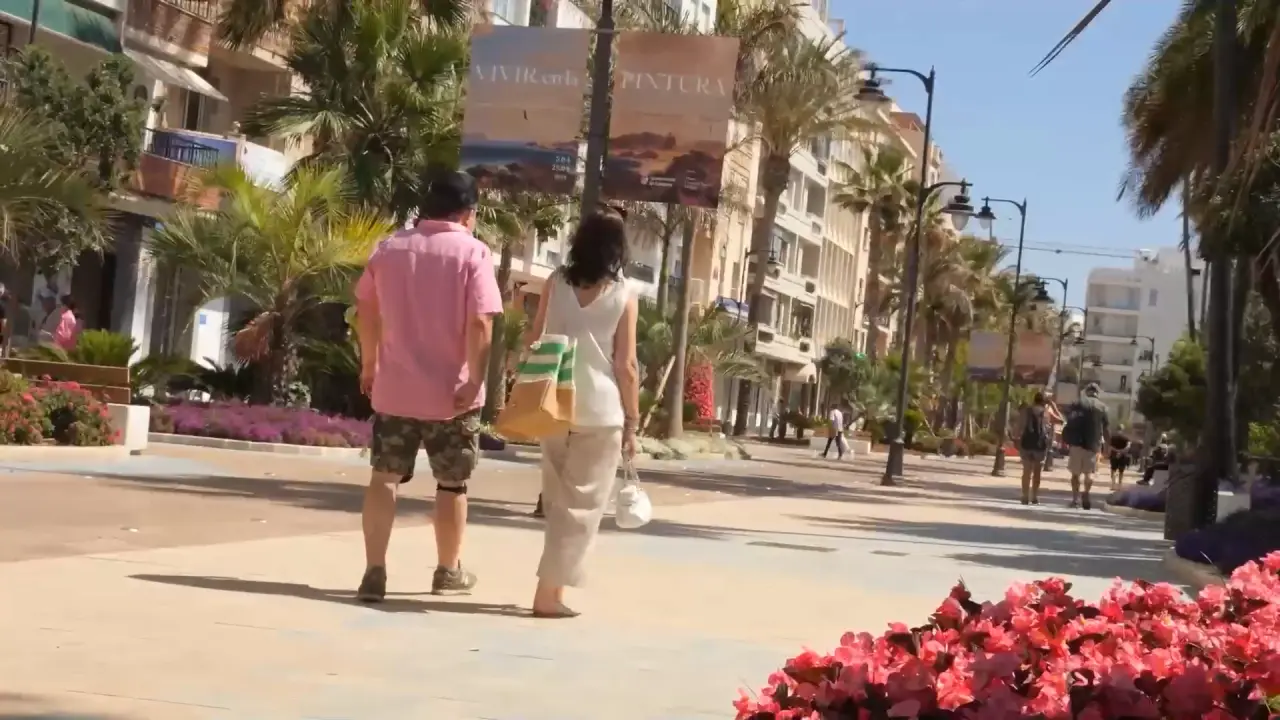
Pedro Manrique Seafront Promenade
Three kilometres of promenade named after a local man shot in 1831 alongside General Torrijos. He was 22 years old. Almost nobody who walks there knows this.
Read the story20th Century
Calvario Park
A statue of a woman on a Vespa. Juana Luna crossed Estepona to attend births when almost no woman drove. The first local woman to ride a motorbike.
Read the story16th Century
Coastal Watchtowers
Seven towers along the coast to warn of Barbary corsairs. The signal was a bonfire. Within minutes, the entire coastline was on alert. 16th century.
Read the story9th Century
Padrón Alto — Castillo el Nicio
At 340 metres above sea level, seven kilometres from the centre, there is a 9th-century Arab fortress. The local historian calls it the most unknown monument in the province.
Read the story1973–1976
Calle Caridad
In 1973 a wall was built at the end of the street. Residents called it 'the wall of shame'. In January 1976 it came down, to the delight of the neighbourhood.
Read the storyPeople of Estepona
The people behind the names.
Teachers, midwives, doctors, mayors and fishermen. The history of a city is the people who made it.
People of Estepona
Pedro Manrique and the promenade that bears his name
Pedro Manrique was the only documented person from Estepona among the forty-nine who died alongside General Torrijos on 11 December 1831, shot for defending the liberal constitution. The night before he died, he wrote a farewell letter. Estepona's seafront promenade bears his name.
People of Estepona
Juana Luna, the midwife on a Vespa
Juana Luna was a midwife in Estepona when women on motorbikes were an exception. Her statue in Parque del Calvario shows her with the Vespa. A figure who captures a whole era in a single image.
People of Estepona
Doña Mencía Navarro: 33 years, 7 months and 25 days
Doña Mencía Navarro taught in Estepona for 33 years, 7 months and 25 days. The daughter of farmworkers, she copied her classmates' books by hand in order to study. The precision of the date reflects the weight of her presence.
People of Estepona
The doctor who healed Estepona and ended up in Algiers
Licenciado Murillo was a 17th-century physician who treated epidemics in Estepona and Marbella, was captured by Barbary pirates and spent 13 years imprisoned in Algiers, where he continued practising medicine through three epidemics. Calle Murillo in the old town bears his name.
People of Estepona
Three doctors and a century on Calle Caridad
From 1897, the Mena Arce family's practice at Calle Caridad 125 saw, according to InfoEstepona, 'more than four generations of Estepona townspeople' pass through it. The interview itself documents three doctors in the family, not four: the grandfather who opened it, Antonio, and his son Francisco.
People of Estepona
The mayor who transformed Estepona — and at what cost
Ángel Farinós was the mayor of Estepona's great urban transformation in the 1960s. The chronicle that documents his achievements also notes the mistakes. The chronicler was the deputy mayor who worked alongside him.
People of Estepona
The Estepona native who led a mutiny against Chilean independence
Tomás de Figueroa Caravaca was born in Estepona in 1747 and arrived in Chile in exile, after killing a rival in a duel in Spain. He rose to colonel in the colonial army and, on 1 April 1811, led the «Motín de Figueroa», the first military uprising against Chile's independence process. He was captured and executed the same day.
People of Estepona
The Estepona native who became bishop in Colombia, Ecuador and Peru
José Carrión y Marfil was born in Estepona in 1747 and, after studying law and being ordained a priest, crossed the Atlantic as vicar general to the archbishop of Santa Fe de Bogotá. He served as auxiliary bishop of Santa Fe, bishop of Cuenca (present-day Ecuador) and bishop of Trujillo (Peru) for 26 years, before returning to Spain to lead the abbey of Alcalá la Real until his death in 1827.
People of Estepona
The Estepona native who documented Seville's great floods
Francisco de Borja Palomo y Rubio was born in Estepona in 1822 and earned a doctorate in Law from the University of Seville, where he later won, by competitive examination, the chair of History and Elements of Roman Law in 1865. He is best remembered as a historian: his reference work, published in 1878, reconstructs centuries of great floods of the Guadalquivir river through Seville.
Episodes
Stories worth telling.
20th century
"The Paseo del Carmen is gone, where we walked so many rounds"
The 'Canto a Estepona' by Juan Usero Fernández, written from Venezuela, is one of the most moving documents of local memory: the voice of the emigrant who remembers a town that no longer exists.
Read20th century
The boat that never set sail
A farmers' cooperative was sabotaged on the day of its first launch. The boat's ropes were found cut. They kept trying. A story of collective resistance with an unknown ending.
Read16th–17th century
Seven watchtowers on permanent alert
From the 16th century, Estepona's coast was defended by a system of seven watchtowers that warned of Barbary corsair attacks. They still stand today, spread across 21 kilometres of coastline, and are one of the most singular pieces of heritage in the region.
Read16th century
The corsair who slept in the castle before attacking it
In 1545, the Barbary corsair Alí Hamet, known as 'Aliamate', attacked Estepona twice — five years after spending a night as a prisoner in its castle on his way to a prisoner exchange. The second time, an ambush laid by Marbella's cavalry at Celada Vieja left seventy Turks dead.
Read1940–1980
The flamenco festival with Enrique Morente and the film week with five countries
On 12 April 1975, Estepona hosted the III Gran Festival de Cante Grande with Enrique Morente, Manuel Gerena and Parrilla de Jerez. In 1977, the I International Week of Educational Cinema brought five countries together. Two episodes that reveal a town with a cultural life of its own.
Read9th–10th century
The castle nobody knows exists
Castillo el Nicio is an Arab fortress from the 9th century, located at Padrón Alto in Estepona, at 340 metres altitude and seven kilometres from the centre. It played an active role in Omar ben Hafsum's rebellion and was definitively conquered in 923 AD. It remains one of the least-known historical sites in the province.
Read20th century
The fishing guild that voted, competed and ran the city
The Cofradía de Pescadores de Estepona, Estepona's fishing guild, was for decades far more than a trade union: it took part in council debates, organised sporting tournaments and was one of the most active civic actors in the city until tourism changed the local economic structure.
Read1973–1976
The wall the residents tore down
In 1973, the council swapped a public plot at the end of Calle Caridad for private land. The result was a wall that blocked a passage. Residents called it 'the wall of shame'. The council itself voted that the deal had been harmful. The wall fell in January 1976, to the neighbourhood's delight.
Read18th–20th century
When Estepona faced the sea
Before tourism, Estepona lived by the sea. In 1752 there were 124 fishermen. The Cofradía de Pescadores, Estepona's fishing guild, was one of the two pillars sustaining the local economy. In 1957 the Nautical Club arrived; in 1979, the marina with 613 vessels. The Paseo del Carmen was demolished to build the seafront promenade.
Read9th–17th century
Castles and towers: a coast always on watch
For centuries, Estepona had a defensive system of two castles and seven coastal towers. Castillo el Nicio, of Arab origin from the 9th century, dominated the interior from Padrón Alto. Castillo de San Luis, from the 16th century, stood in the town centre. The seven watchtowers watched over 21 kilometres of coastline. Three layers of defence on the same territory.
Read14th–20th century
The streets that hold memory
The historic centre of Estepona preserves memory in its squares, streets, houses and churches. Plaza de las Flores had at least six different names depending on the political power of each era. A cistern of Muslim origin survives intact beneath Casa del Aljibe. The Church of Los Remedios stands on the site of a 1400-era forest. Calle Murillo is named after a doctor held captive in Algiers for thirteen years.
ReadBronze Age
The 5,000-year-old cemetery uncovered while building a motorway
The Necropolis of Corominas is a megalithic site from the final Neolithic and Chalcolithic periods, found between 2000 and 2001 during preliminary works for the Costa del Sol toll motorway and excavated between 2001 and 2002. It contains five well-preserved megalithic tombs, dating back some 5,000 years, and several Bell Beaker-period burials from the early Bronze Age. As the motorway route could not be rerouted, the tombs were dismantled and rebuilt in an interpretation centre under a burial mound in Parque San Isidro Labrador, now open to visitors by prior reservation.
ReadPre-Roman (3rd–1st century BC)
The site catalogued since 1994 that no one has ever excavated
Cerro Patraina is an archaeological site catalogued in Estepona's urban planning since 1994, on a hill above the municipality's western coast, between Corominas and Arroyo Vaquero. According to the municipal Archaeological Survey record, it occupies the hilltop, 68 metres above sea level, with an estimated area of about 300 m², and is defined as a watchtower with wide visual command: under the vegetation that covers it, a walled perimeter of ashlar blocks has been made out. The chronology remains open — the original survey documented medieval-period pottery at the site, though a pre-Roman hypothesis (3rd–1st century BC) is also proposed today, based on the type of ashlar, with a parallel cited at Alcorrín (Manilva). Two preventive archaeological interventions, in 2008 and in 2020, surveyed the area around the hill for two separate development projects (Sector SUNP-01 and Sector SUP-02 "La Gaspara"); both focused on the slopes and access routes, not the summit, and both conclude that the site itself, if it matches its catalogue description, remains untouched.
Read4th–6th century AD
The Roman tower nobody has settled: tomb or watchtower?
In Estepona's old town, on Calle Villa, stand the base remains of an octagonal Roman tower from the 4th century AD that may have reached at least 12 metres in height. It was abandoned two centuries later, and its materials were plundered at different times — partly during the construction of the Muslim wall, and, in the 20th century, by a decorative fountain. Its function remains unresolved: it may have been a funerary mausoleum or a thynnoskopeion, a watchtower for tuna fishing.
ReadPrehistory
The 5-centimetre clay figure the town council declared a symbol of the city
The Venus de Estepona is a small fired-clay figurine about 5 centimetres tall, with a schematic female shape, found in August 2011 at a prehistoric 'pit field' site within the municipality, alongside hand-made pottery, flint arrowheads, polished stone axes, necklace beads and other stone idols. It is over 5,000 years old and, according to the town council, the only piece of its kind found in excavations in Málaga province. It is interpreted as an amulet or fertility symbol linked to the rituals of the time. It is on display at Estepona's Municipal Archaeological Museum; the town council began the process of declaring it an official symbol of the city in 2014, a process formally approved by the regional government (Junta de Andalucía) in early 2015.
Read12th–15th centuries
The city that surfaced under Plaza de las Flores
Istibuna is the name of the Islamic medina beneath Estepona's old town; the municipal Archaeological Museum devotes its own room to it. Between 2013 and 2016, urban excavations around Plaza de las Flores uncovered a previously unknown Andalusian suburb, with houses and two craft installations: a leather tannery from the Almohad period (12th-13th centuries) and a pottery kiln from the Nasrid period (13th-15th centuries). The find was published in 2020 by a team of five archaeologists. According to the museum itself, the Andalusian city reached its greatest splendour from the 12th century onward. Andalusian rule ended in 1456, when the town passed into Castilian hands.
ReadPalaeolithic
The 128,000-year-old stone tools that redraw Estepona's map
At Las Mesas de Saladavieja, in the municipality of Estepona, an archaeological survey required by local planning rules — ahead of development in an area with known remains — uncovered several hundred stone artefacts over 128,000 years old, from the Lower Palaeolithic. They are stone tools, mostly made from sandstone river cobbles and, to a lesser extent, limestone and flint, used to cut, work hides, strike or extract fat from animals. According to the archaeologists behind the find, it is the first excavated site of its kind on the Western Costa del Sol. The dig, authorised by the Junta de Andalucía and led by archaeologist Cibeles Fernández (Arqueotectura), included a lithic study by prehistorian Luis Pérez Ramos, a specialist in Andalusian Palaeolithic archaeology. The team published the results in 2021 in the academic journal Mainake, extending the site's chronology into the Middle Palaeolithic (Mousterian) as well. The pieces are now part of the Estepona Municipal Archaeological Museum's collection, in a space dedicated to the Palaeolithic.
ReadPhoenicians
The Phoenician settlement that exported fish sauce to Athens
El Torreón is a Phoenician-Punic settlement on a headland on the right bank of the mouth of the Guadalmansa river, in the municipality of Estepona. According to the town council, it was founded from the 6th century BC and was dedicated to producing fish salting and sauces — some amphorae were exported as far as Athens — plus farming, livestock and iron and, especially, copper mines at the headwaters of the Guadalmansa itself. The settlement remained inhabited into the early Roman period; according to Andalucia.com, occupation lasted around eight hundred years, until roughly 200 AD. Some academic sources identify it with Salduba, a city named in classical sources, though that identification has been a disputed hypothesis since the late 19th century, not a settled fact. Most of the Municipal Museum's collection from the site came from Luis Soto's 1974 excavation. El Torreón is a different site from the Villa Romana de las Torres, the Roman bath complex declared a Site of Cultural Interest that stands beside the Guadalmansa watchtower, in the same area.
Read1st – 5th century AD
The Roman villa two excavators read in two different ways
The Villa Romana de las Torres is an archaeological site next to the Guadalmansa watchtower, on the eastern coast of the Estepona municipality. It was first excavated in 1915-1916, led by José Martínez Oppelt, and again in 1929, led by José Pérez de Barradas. Between the two campaigns, around 18 structures and five geometric mosaics were recorded, along with marble columns, coins spanning the reign of Emperor Vespasian (69-79) to that of Maximinus (235-238), and a bronze bust identified as Gordian II (238). Martínez Oppelt interpreted the complex as Roman baths; Pérez de Barradas concluded its wealth came from producing garum, the most prized fish sauce of the Roman world. The official decree declaring the site a Cultural Heritage asset, summarising the 1929 findings, describes the complex as "a Roman villa and salting factory" and dates its construction to the late 2nd or early 3rd century AD; the same decree records that soundings carried out in 1990 confirmed the site was later used as a necropolis, after being abandoned. In 2001, an academic campaign led by Ana Arancibia Román for the Junta de Andalucía — combining geophysical survey and a test excavation — confirmed continuous occupation of the area between the 1st and 5th centuries AD, and noted that only a small part of the site has been excavated so far. It has been protected as a Site of Cultural Interest since Decree 122/1996, amended by Decree 181/1999 (BOE-A-1999-23246). It is a different site from El Torreón, the Phoenician-Punic settlement in the same Guadalmansa area.
Read15th century
1456: the year Istibuna stopped being al-Andalus
In 1456, as part of the final frontier of the Nasrid kingdom of Granada, King Enrique IV of Castile carried out the definitive occupation of Istibuna — the Andalusi city beneath today's old town of Estepona — after "various vicissitudes" through the late medieval period. According to the chronicles of the time, studied by historian Adelina Romero Martínez (University of Granada), it was not a military assault: a border incident between Muslims and Christians led the king to send two nobles to quell it; they set fire to the area and, seeing the smoke, the town's Muslim residents abandoned it with their belongings. The king settled into the empty town days later. A year on, in 1457, he formalised the grant of the town to don Juan Pacheco, Marquis of Villena — who had requested it — through a royal charter (privilegio rodado) preserved in the municipal records of Jerez de la Frontera. The popular tourist story that blames unpaid taxes for the conquest has no support in any academic source: the chronicles themselves contradict it. Part of the wider story does have independent academic support: the town was destroyed after the conquest so it could not be retaken by the Muslims, and it was not resettled until May 1502, with 30 households — documented by Navarro Luengo, Suárez Bedmar and Martín Parrado's study of the Castillo de San Luis (FORTMED 2020).
ReadPre-Roman origin
Estepona's name is older than the Arabic it was first written in
According to Toponomasticon Hispaniae, a research project funded by Spain's Ministry of Science and Innovation with several Spanish universities taking part, Estepona's place name does not originate in Arabic. It comes from a pre-Roman root, *Istippona, whose meaning is unknown. Linguist José A. Correa, cited by the project, reconstructs the original form as *Istippo / Istipponis, related to other place names in the same area — Acinippo, Baecippo, Baesippo, Ventippo — which share the same [ist-] and [-ipp] segments. Correa finds no support for a Phoenician-Punic origin and instead proposes a Tartessian-Turdetanian one, within the same group of place names in [-ipp]. The oldest surviving written form of the name, however, is the Arabicised one: no earlier text has survived. From there the name passes into Castilian chronicles — the earliest verified instance, Diego Enríquez del Castillo's Crónica de Enrique IV, already writes "villa de Estepona" — down to the form used today.
Read1st–2nd century AD
The Roman building brought down by the ground itself, not by an attack
In 2023, an archaeological excavation at Las Mesas de Saladavieja — the same area where the oldest known Palaeolithic stone tools in Estepona had been documented in 2021 — uncovered the remains of a roughly square Roman rural building, about 14 by 14 metres, built in the second half of the 1st century AD. Its walls, of rubble masonry with some sandstone ashlar bound with mud, were laid out around four interior spaces. Fragments of a rotary millstone and around twenty loom weights (pondera) point to a use tied to processing agricultural and livestock produce. The building was short-lived: it lay in ruins by the late 1st or early 2nd century AD, with no signs of fire or violent destruction, because part of its foundations sat on expansive clay marls that gave way with seasonal changes in moisture. After abandonment, its materials were stripped down to the foundations themselves. The dating rests on tableware pottery — Hispanic and South Gaulish terra sigillata — found in the building's collapse layers. The dig, led by the firm Arqueotectura (César Augusto León Martín, José María Tomassetti Guerra and Cibeles Fernández Gallego) and authorised by the Junta de Andalucía, also recovered an alquerque — an ancient board game carved into the rock — now transferred to the Estepona Archaeological Museum for conservation.
ReadUndated
Four cannons and a cannonball, with no shipwreck to claim them
Cañones del Saladillo is an underwater archaeological site off El Saladillo beach, by Matas Verdes, in the municipality of Estepona. According to the decree that protects it, it consists of two groups of cannons: a first group of three, located off Matas Verdes; and a second group of four large cannons and a cannonball. The decree is explicit on one point: "in principle they do not correspond to any shipwreck, because no associated material has been found" that would link them to a known sunken vessel. The site was listed as a Bien de Interés Cultural, classified as an Archaeological Zone, by Decree 285/2009 of 23 June — a single ruling that protected fifty-six underwater sites along the whole Andalusian coast at once — published in the BOJA official gazette, issue 129, on 6 July 2009. Neither the decree nor any other official source consulted gives a precise date for the cannons.
Read14th century
The naval battle fought off the coast of Estepona in 1342
In 1342, during the long naval war between Castile and the Marinid sultanate of Morocco known as the Battle of the Strait, a naval engagement was fought off the coast of Estepona — recorded by medieval chronicles and modern historiography as the Battle of Estepona. According to historian Wenceslao Segura González's reconstruction from the Crónica de Alfonso XI and Jerónimo Zurita's Anales de la Corona de Aragón, the Aragonese admiral Pedro de Moncada (Pere de Montcada), commanding twenty galleys en route to reinforce the Christian blockade of Algeciras, encountered thirteen Marinid galleys from Morocco off Estepona. Four Muslim galleys were captured, two ran aground near the coast, and the remaining seven escaped to Morocco. The captured galleys were carrying wheat destined to resupply besieged Algeciras — a detail that ties the battle directly to the siege Alfonso XI launched weeks later, on 2 August 1342. The exact date is reconstructed rather than directly recorded: Zurita places it at the end of May, and the Crónica de Alfonso XI places it four days after the victory at Guadalmesí (27 May) — both pointing to 31 May 1342.
Read20th century
The bullring a student designed as his thesis in the United States
Estepona's bullring opened in 1972, designed by architect Juan Mora Urbano, who conceived it years earlier as his final degree thesis while studying in the United States. It covers 21,000 m² and is considered the world's first asymmetric bullring: its oval, west-raised stands are built to maximise shade, and it drops the traditional perimeter tunnel galleries for exterior circulation closer to a modern sports stadium. Ronda-born matador Antonio Ordóñez was its first manager.
Read20th century
Estepona, 14 January 1937: a town occupied without resistance
On 14 January 1937, as part of the Francoist offensive on Málaga, Nationalist troops entered Estepona without meeting armed resistance. Months later, a series of courts-martial ended in dozens of executions at the town cemetery.
Read2012–presente
El museo al aire libre que empezó con una Venus que ya no existe
La Ruta de Murales Artísticos de Estepona nació en 2012 con el objetivo de convertir fachadas de barrio en un gran museo al aire libre. El primer mural, «La Venus de Estepona», se inauguró ese mismo año: 120 m² en una fachada de la Barriada Mar y Sierra, obra de Ana Cecilia Salinas y financiado íntegramente por la Fundación La Caixa. La artista tomó el nombre y parte de la iconografía de la propia Venus de Estepona, la figurilla prehistórica hallada en 2011. El mural original ya no existe —la pintura se desgastó y la fachada se repintó de blanco—, pero la ruta que empezó con él suma hoy más de setenta obras.
Read