

Route
Urban garden walk.
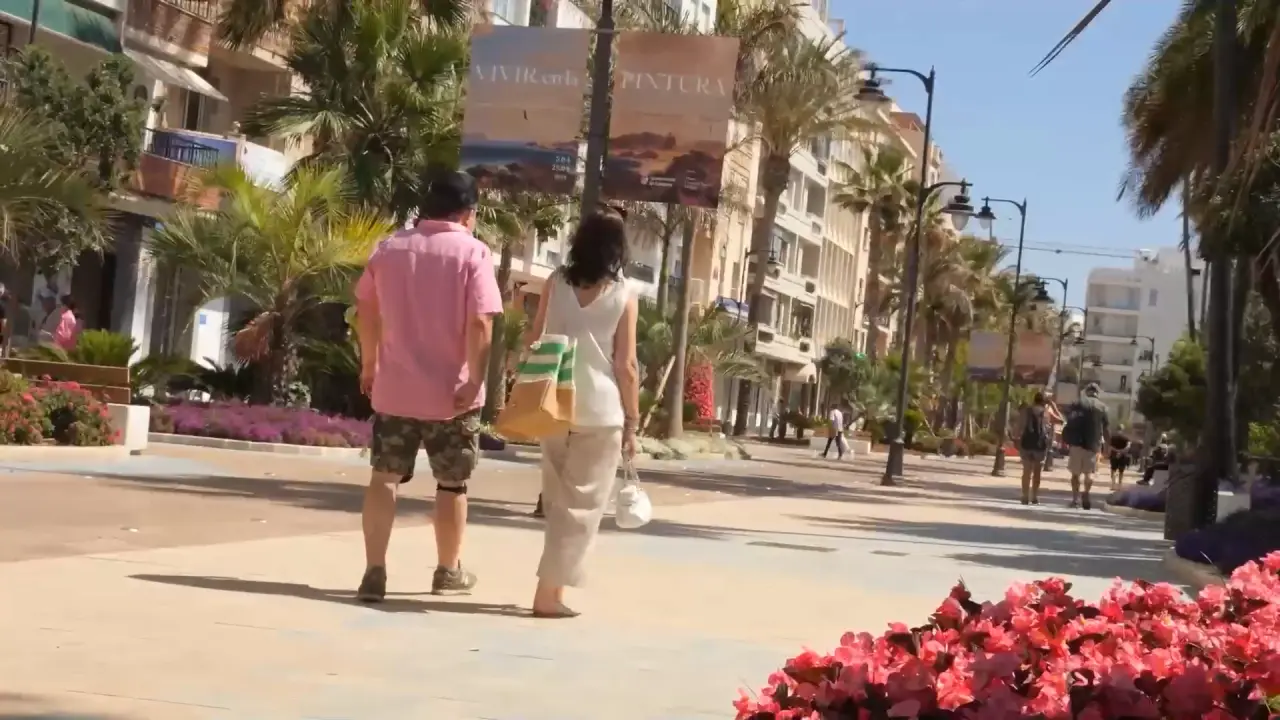
A city that chose to be walked. White streets, flower pots, murals, squares and pedestrian life at the heart of the historic quarter.
Momento perfecto
Best before 11am. The streets have a different quality when the city is still waking up. Freshly watered pots, early light on the façades, and none of the midday noise.
Ideal para
There is no monument at the end. No ticket to buy, no opening hours to respect. This route exists because Estepona's historic quarter is, in itself, the destination.
What you see today is the result of a decision made a few decades ago: pedestrianise the centre, remove traffic, install thousands of flower pots on façades, integrate murals into the fabric of the streets. The Jardín de la Costa del Sol project transformed a neighbourhood into a walkable city in a way that few places on the Costa del Sol have replicated. This is not ancient history — it happened within the same generation that can walk here today.
But the tradition of flowers didn't begin with that project. In 1967, the municipality won the National Prize for the Embellishment and Improvement of Spanish Towns. The flower pots have been here for decades before travel guides discovered them. The modern urban transformation didn't invent the garden: it expanded it.
Contemporary history
Estepona pedestrianised its centre at a time when other coastal cities were widening their streets for cars.
The result was not a tourist postcard: it was an urban decision that changed how local people live — and that turned slow walking into the only real way to understand the old town.
The six stops
Urban garden walk
The entrance to the old town
The first step is leaving the car behind. What follows cannot be seen from inside one. The car-free streets begin here and the pace changes on its own — you don't need to decide it.
Notice the change in surface: from asphalt to cobblestone. The city gives you the signal before you even realise it.
Plaza de las Flores
The heart of the urban garden. It has had at least six names before the current one: Plaza Nueva, de la Cárcel, de la Constitución, del Rey, de la República and de José Antonio. The last one won because it was the only one that did not depend on who was in charge. It is the natural starting point and the place that appears most often in photos nobody can quite place.
If there's a terrace, sit down even if you're not thirsty. This is one of the few places in the old town where it's worth staying still.
The streets with flower pots
Not decoration. A policy. Thousands of pots, deliberately distributed, make every façade part of the same garden. The uniformity is the rarity: all white, all with colour. But the pots don't belong to the council — each resident tends their own. There is a silent competition that has been going on for decades.
The pots are not the same. Some residents have spent years perfecting theirs, others have just arrived. The garden has layers.
The murals you find in passing
They appear while you are walking somewhere else. That is the point: you don't need to go looking for them. They are integrated into the same façade that has flower pots, on the same street you were already going to walk. Over fifty in the old town, many without signage.
The mural is not the destination: it is what happens when you walk the city slowly.
Inner squares and shade
The rhythm of the old town calls for pausing. A small square, shade, a bench. Local life moves at its own pace and the route adapts to it. There are unnamed corners where it is worth doing nothing. The Plaza de los Patios, if you find it, is one of those places.
Don't look for the name of the square. Go in if there's shade and stay if there are benches. The old town works like that.
Towards the seafront promenade
The white streets end where the sea begins. The Promenade bears the name of Pedro Manrique, a 22-year-old from Estepona shot in 1831 alongside General Torrijos for defending the liberal constitution. The city remembers him here, with the Mediterranean as a backdrop. There are espeto grills at midday if the weather allows.
The promenade connects the urban garden to Estepona's seafaring identity. They are the same city seen from different angles.
This is also Estepona
Every flower pot in the old town has someone responsible for it. There are residents who have spent years tending theirs and competing in silence to have the most beautiful display on their doorstep. The urban garden is not just council policy: it is also neighbourhood pride. That difference is something you feel when you walk through it.
Antes de ir
No car needed: the pedestrianised old town has no parking alongside the main streets. Comfortable shoes: the cobblestones are beautiful but uneven. Better on a weekday: at weekends in high season the old town can get busy. If you're visiting in July or August, go early.
You might also like
Route of the Murals
Estepona's street art as a dedicated walk.
Explore PlaceTypical streets
Flowers in the windows, silence in the alleyways.
Explore ContextHistory of Estepona
The urban transformation and the city's memory.
Explore Your planPlan your visit
Combine this route with the rest of Estepona.
Get started