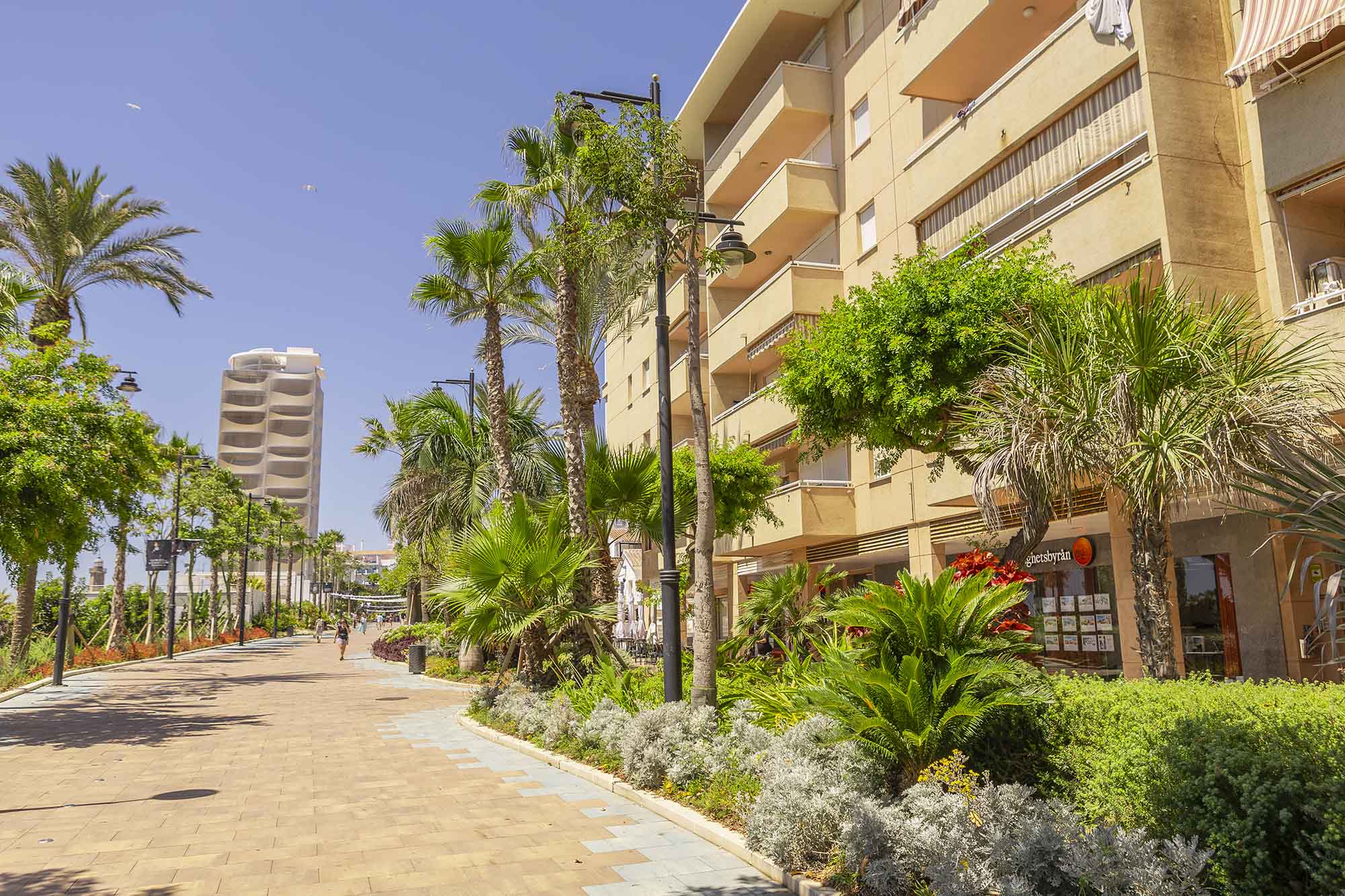
Paseo Marítimo
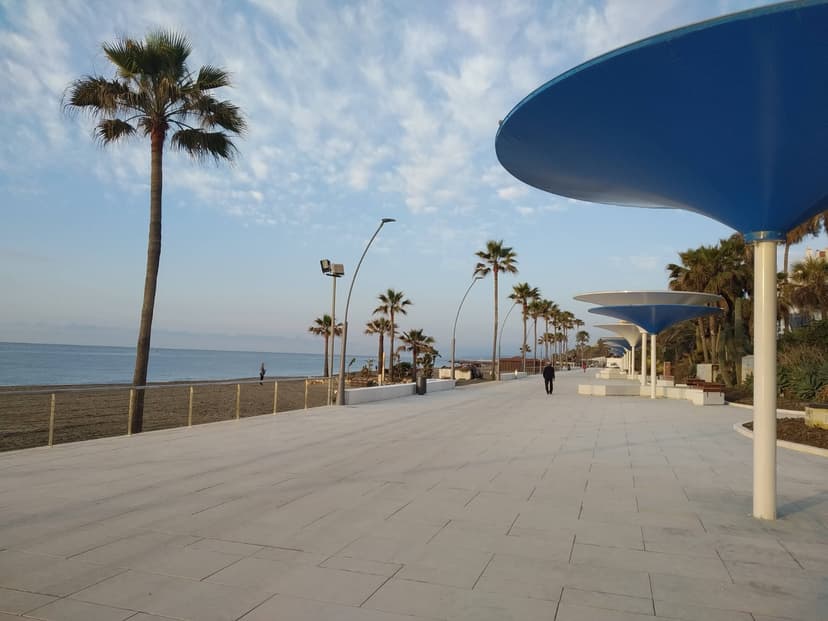
It runs along La Rada beach from the town centre to the fishing harbour. Palm trees, beach bars and the same scene that has played out here for decades: people walking unhurried beside the Mediterranean. The promenade is named after a local man shot in 1831.
About this place
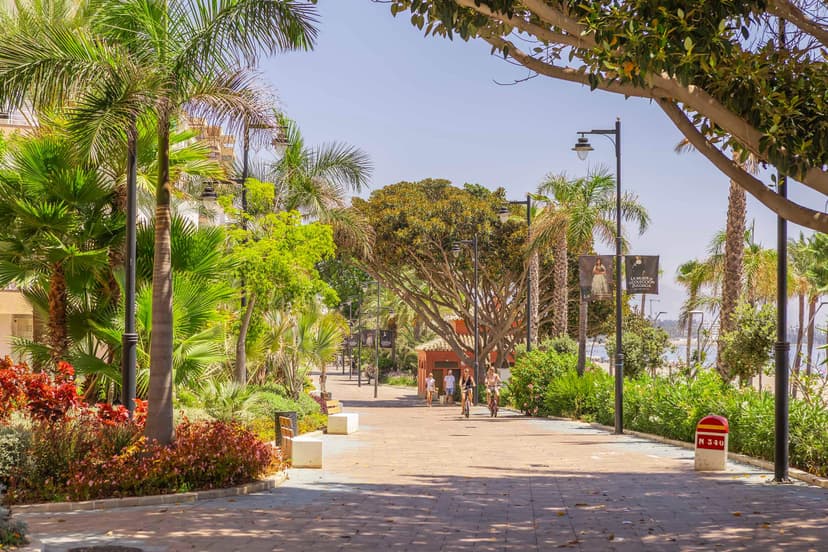
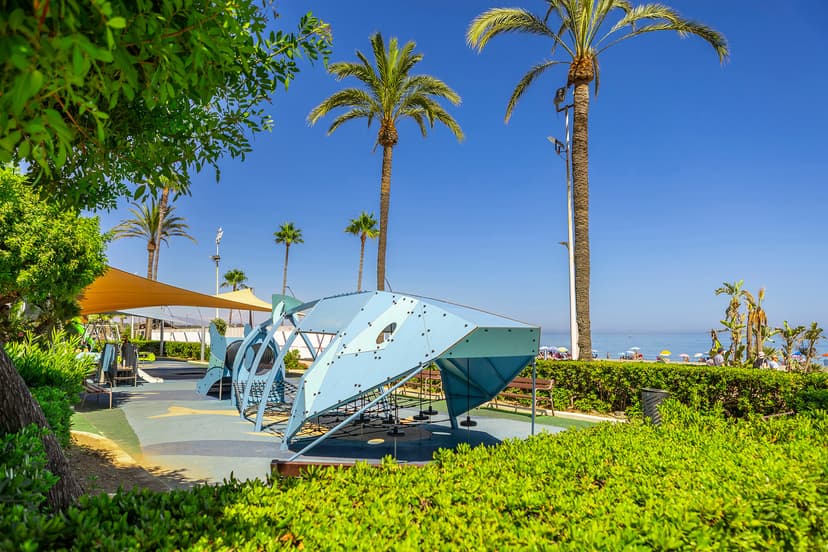
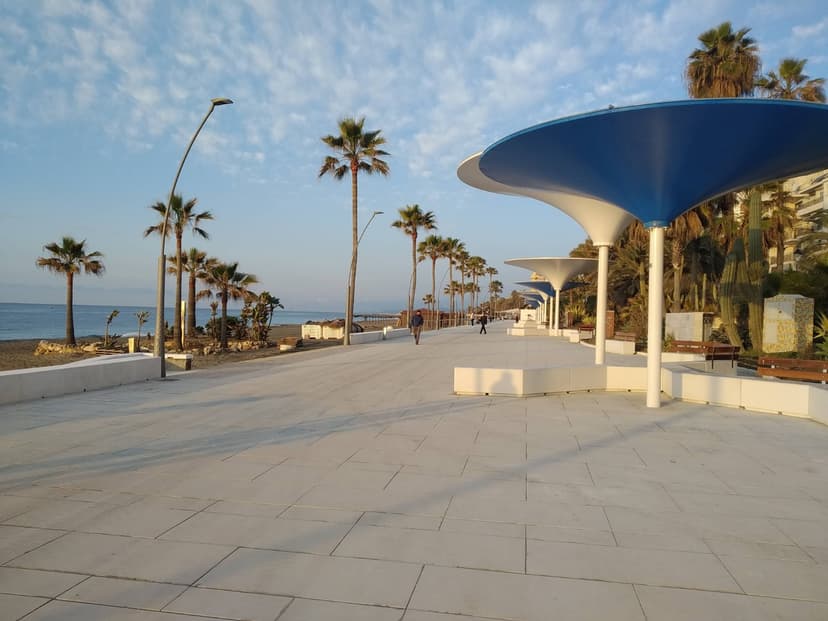
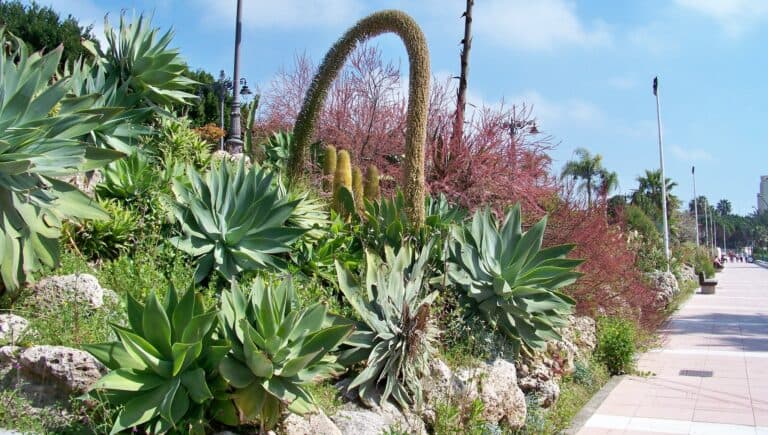
Estepona's seafront promenade is one of the longest on the Costa del Sol. It runs parallel to La Rada beach from the town centre to the Fishing Harbour, with a generous width and ample tree cover throughout. Along the route there are beach bars, restaurants, play areas and multiple direct access points to the beach. The promenade works year-round: in summer it is one of the busiest spots in town; in winter it maintains a quiet rhythm that makes it one of the best places for a walk out of season. The full distance, end to end, is comfortable on foot in both directions. For parking nearby, two private pay-by-hour car parks sit right on the promenade — Parking Zapallito, underground on Av. de España, and Parking Estepona Paseo Marítimo, on Avenida Juan Carlos I, with 200 supervised spaces — in addition to the municipal network of free bays and €1/day car parks a little further from the seafront.
Tags
Living history
To understand this place better.
Every corner of Estepona carries a story. These articles tell the stories behind this place.
People of Estepona · Siglo XIX
Pedro Manrique and the promenade that bears his name
Pedro Manrique was the only documented person from Estepona among the forty-nine who died alongside General Torrijos on 11 December 1831, shot for defending the liberal constitution. The night before he died, he wrote a farewell letter. Estepona's seafront promenade bears his name.
Read the article20th-century transformation · Siglo XX
From a village without running water to an international destination
In fewer than forty years, Estepona built the seafront promenade, the marina, the large hotels and won a National Beautification Award. The chronicle is clear-eyed: the historic Paseo del Carmen was demolished to make way for the new waterfront.
Read the articleCollective memory · Siglo XX
The fishing guild that voted, competed and ran the city
The Cofradía de Pescadores de Estepona, Estepona's fishing guild, was for decades far more than a trade union: it took part in council debates, organised sporting tournaments and was one of the most active civic actors in the city until tourism changed the local economic structure.
Read the articleCoastal memory · Siglo XVIII – XX
When Estepona faced the sea
Before tourism, Estepona lived by the sea. In 1752 there were 124 fishermen. The Cofradía de Pescadores, Estepona's fishing guild, was one of the two pillars sustaining the local economy. In 1957 the Nautical Club arrived; in 1979, the marina with 613 vessels. The Paseo del Carmen was demolished to build the seafront promenade.
Read the articleWalks