Casa del Aljibe — Museo Arqueológico
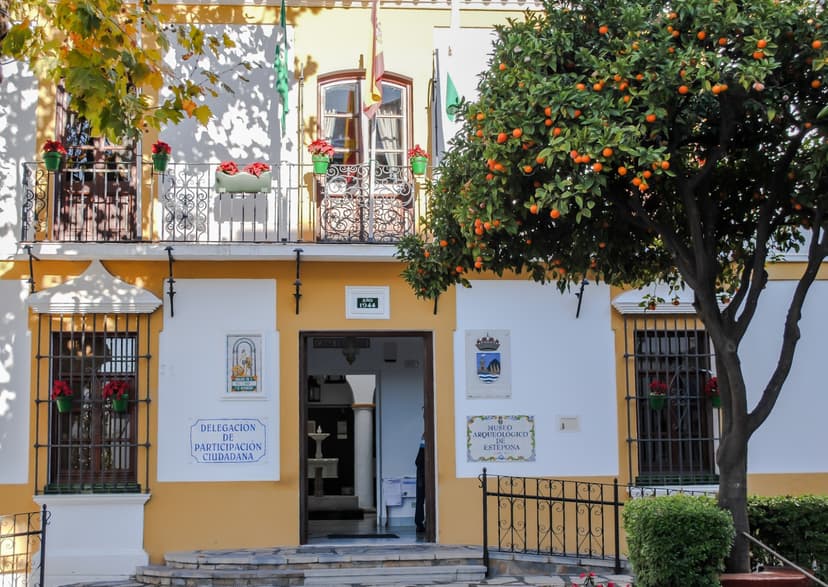
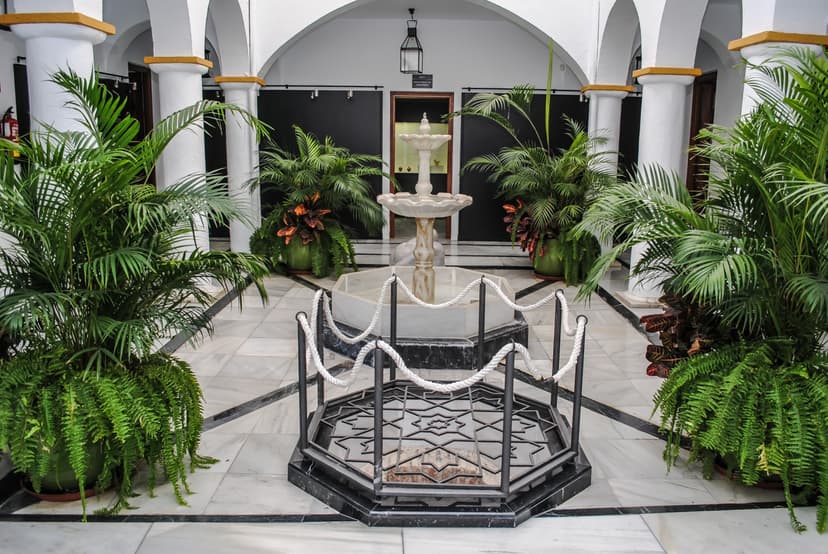
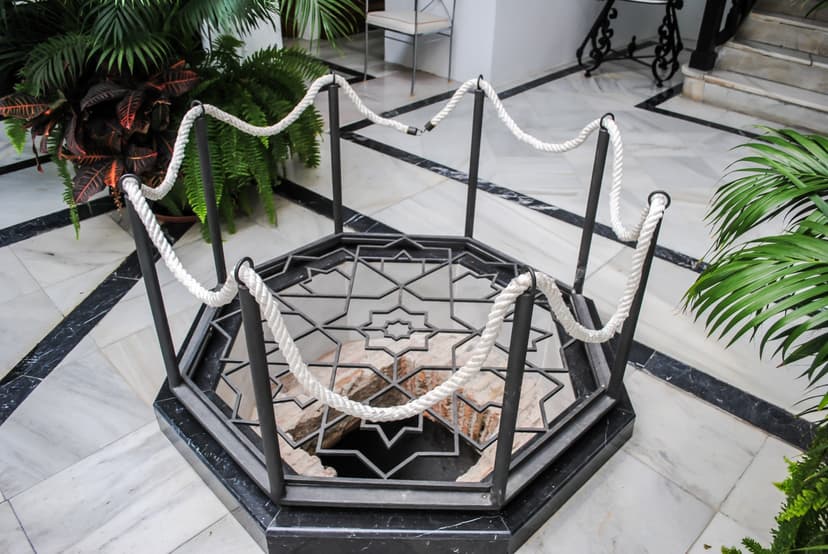
The cistern of Muslim origin was rediscovered during a renovation. The building houses the municipal archaeological museum, with pieces spanning prehistory to the Islamic medina of Istibuna. Note: the museum is temporarily closed for refurbishment — check before you go.
About this place
The building was constructed in the eighteenth century and acquired by the council in 1853 for use as a Town Hall. A 1944 renovation gave it its current configuration. Beneath the courtyard lies a Muslim-origin cistern of rectangular plan with a barrel-vaulted roof, which has given the building its name since antiquity. The archaeological museum displays pieces running from the first settlers to the Islamic medina of Istibuna, by way of the Phoenician navigators and the Roman conquest, drawn primarily from excavations in the surrounding area. It is one of the smallest museums on the Costa del Sol and one of the best at explaining the historical foundations of the region: in half an hour you move through millennia of history with clarity and without the usual sensory overload. The council has not dated the cistern, and it is not known exactly when it was built: the most that municipal heritage sources will say is that it must have stood at the north-west tower of the Muslim fortress that occupied this site. It is currently closed for refurbishment, so check that it has reopened before making the trip.
Tags
Getting there
Plaza Augusto Suárez Figueroa, Estepona
Living history
To understand this place better.
Every corner of Estepona carries a story. These articles tell the stories behind this place.
Urban memory · Siglo XIV – XX
The streets that hold memory
The historic centre of Estepona preserves memory in its squares, streets, houses and churches. Plaza de las Flores had at least six different names depending on the political power of each era. A cistern of Muslim origin survives intact beneath Casa del Aljibe. The Church of Los Remedios stands on the site of a 1400-era forest. Calle Murillo is named after a doctor held captive in Algiers for thirteen years.
Read the articlePortrait of a city · Siglo XVIII
Estepona's 124 fishermen
18th-century Estepona fits into a municipal census: 124 fishermen with traditional nets, vineyards, olive trees, grain and a winepress in every farmhouse. A human-scale city whose economy tourism had yet to invent.
Read the articlePrehistory · Prehistoria
The 5-centimetre clay figure the town council declared a symbol of the city
The Venus de Estepona is a small fired-clay figurine about 5 centimetres tall, with a schematic female shape, found in August 2011 at a prehistoric 'pit field' site within the municipality, alongside hand-made pottery, flint arrowheads, polished stone axes, necklace beads and other stone idols. It is over 5,000 years old and, according to the town council, the only piece of its kind found in excavations in Málaga province. It is interpreted as an amulet or fertility symbol linked to the rituals of the time. It is on display at Estepona's Municipal Archaeological Museum; the town council began the process of declaring it an official symbol of the city in 2014, a process formally approved by the regional government (Junta de Andalucía) in early 2015.
Read the articleAndalusian heritage · Siglo XII – XV
The city that surfaced under Plaza de las Flores
Istibuna is the name of the Islamic medina beneath Estepona's old town; the municipal Archaeological Museum devotes its own room to it. Between 2013 and 2016, urban excavations around Plaza de las Flores uncovered a previously unknown Andalusian suburb, with houses and two craft installations: a leather tannery from the Almohad period (12th-13th centuries) and a pottery kiln from the Nasrid period (13th-15th centuries). The find was published in 2020 by a team of five archaeologists. According to the museum itself, the Andalusian city reached its greatest splendour from the 12th century onward. Andalusian rule ended in 1456, when the town passed into Castilian hands.
Read the articlePrehistory · Paleolítico
The 128,000-year-old stone tools that redraw Estepona's map
At Las Mesas de Saladavieja, in the municipality of Estepona, an archaeological survey required by local planning rules — ahead of development in an area with known remains — uncovered several hundred stone artefacts over 128,000 years old, from the Lower Palaeolithic. They are stone tools, mostly made from sandstone river cobbles and, to a lesser extent, limestone and flint, used to cut, work hides, strike or extract fat from animals. According to the archaeologists behind the find, it is the first excavated site of its kind on the Western Costa del Sol. The dig, authorised by the Junta de Andalucía and led by archaeologist Cibeles Fernández (Arqueotectura), included a lithic study by prehistorian Luis Pérez Ramos, a specialist in Andalusian Palaeolithic archaeology. The team published the results in 2021 in the academic journal Mainake, extending the site's chronology into the Middle Palaeolithic (Mousterian) as well. The pieces are now part of the Estepona Municipal Archaeological Museum's collection, in a space dedicated to the Palaeolithic.
Read the article