Iglesia de Ntra. Sra. de los Remedios
Late Baroque, raised in the late eighteenth century as the church of the Franciscan convent, over the old Veracruz chapel. The doorway carries the date 1772. And a single tower: the other one in those old-town photographs stands a hundred and twenty metres away and is the Clock Tower.
Style
Late Baroque
Doorway
Dated 1772
Towers
Just one
Today
Parish & patron saint
Not twin towers
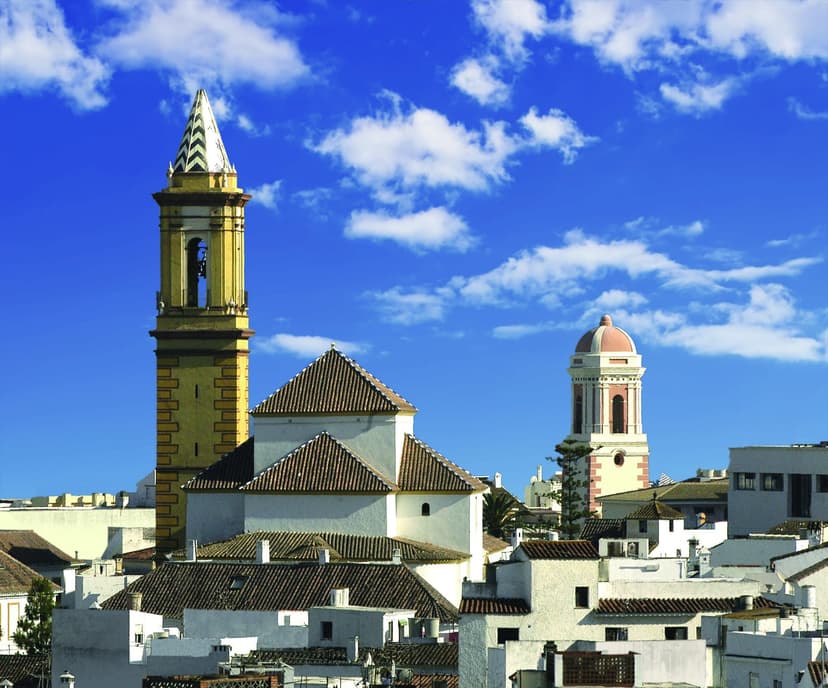
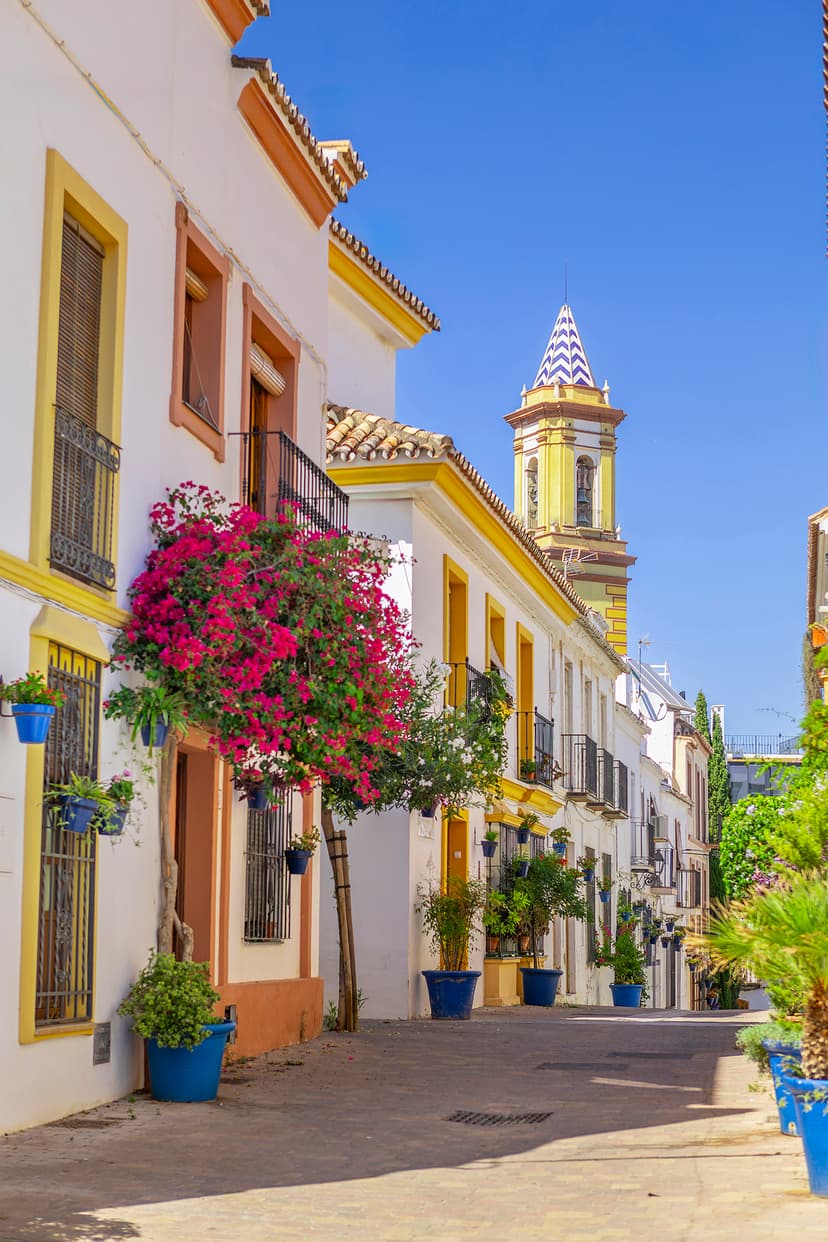
The classic photo of the old town shows two towers rising above the rooftops, and that is where the confusion comes from. They are two different buildings, a hundred and twenty metres apart: the church's own tower — tall and slender, in four stages — and, further south, the Clock Tower, all that stayed standing of the earlier church after the 1755 earthquake.
About this place
There is one photograph of Estepona's old town that repeats across postcards, brochures and guidebooks: two towers rising above the white rooftops. That image is where the idea of the "twin towers" of the Church of Los Remedios comes from. The church does not have twin towers. It has one.
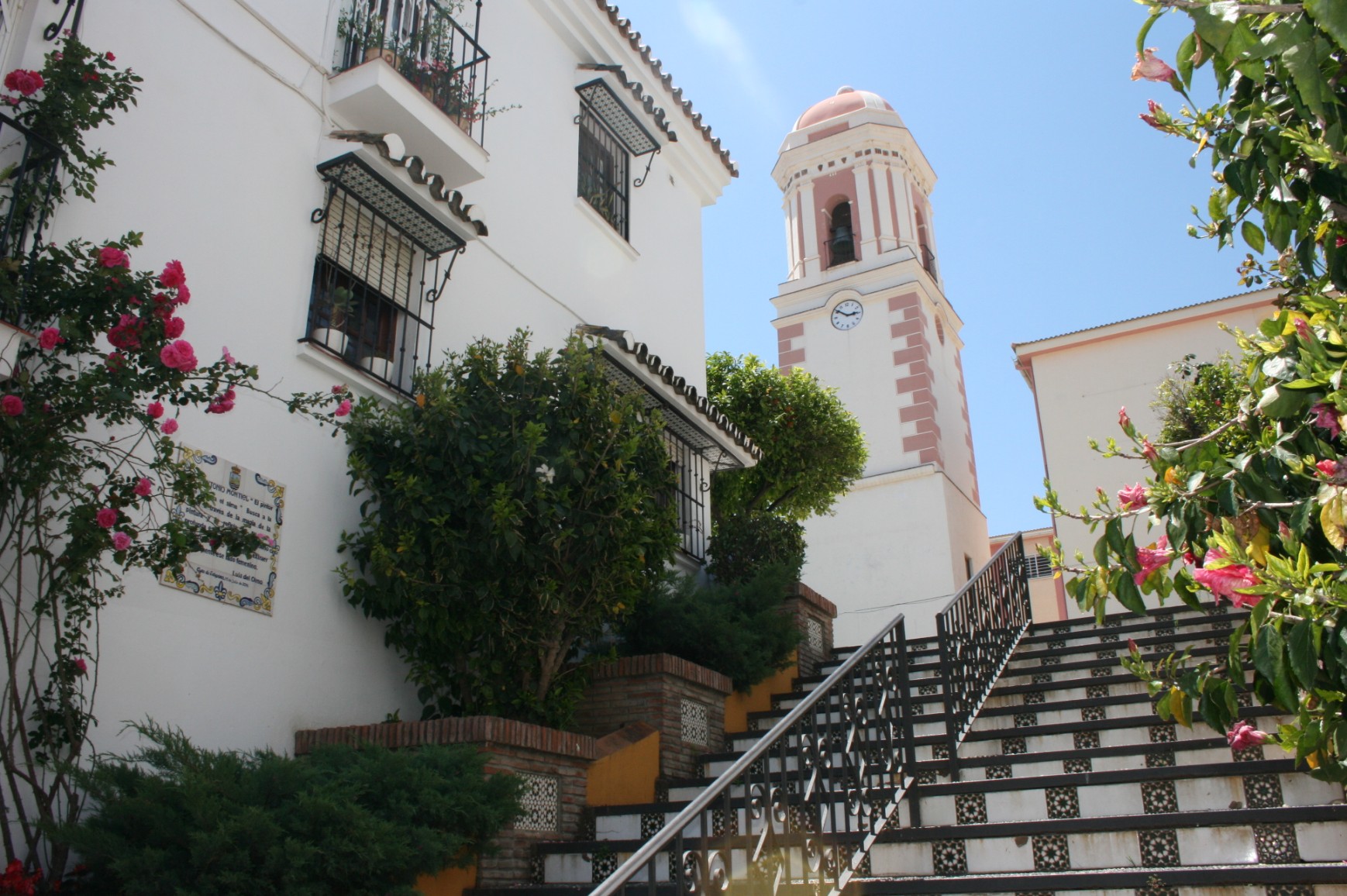
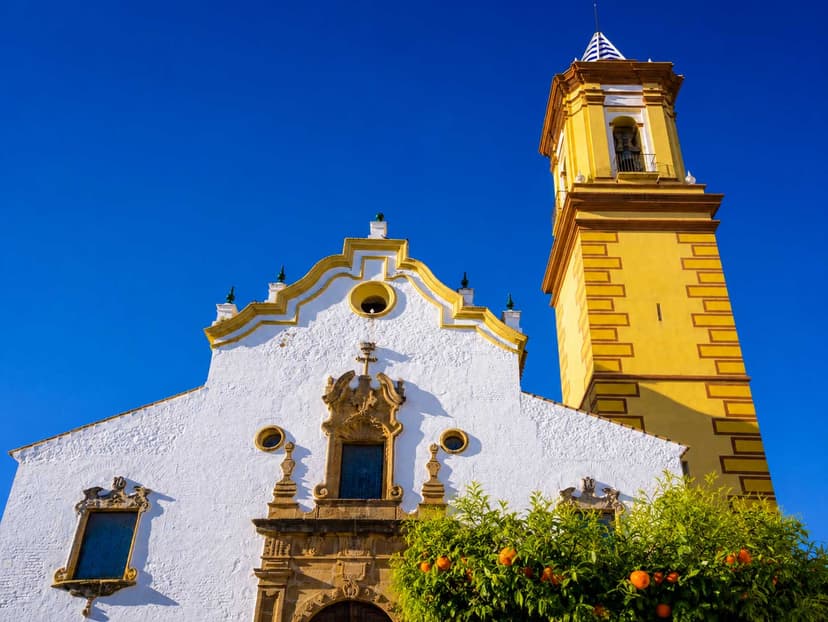
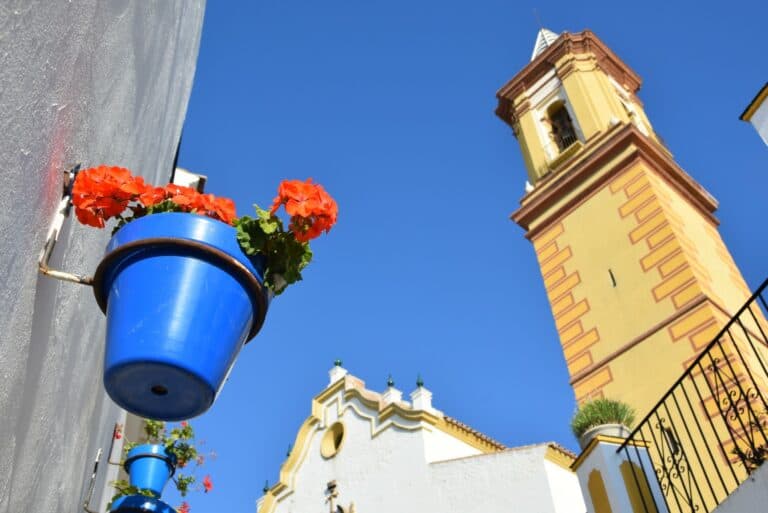
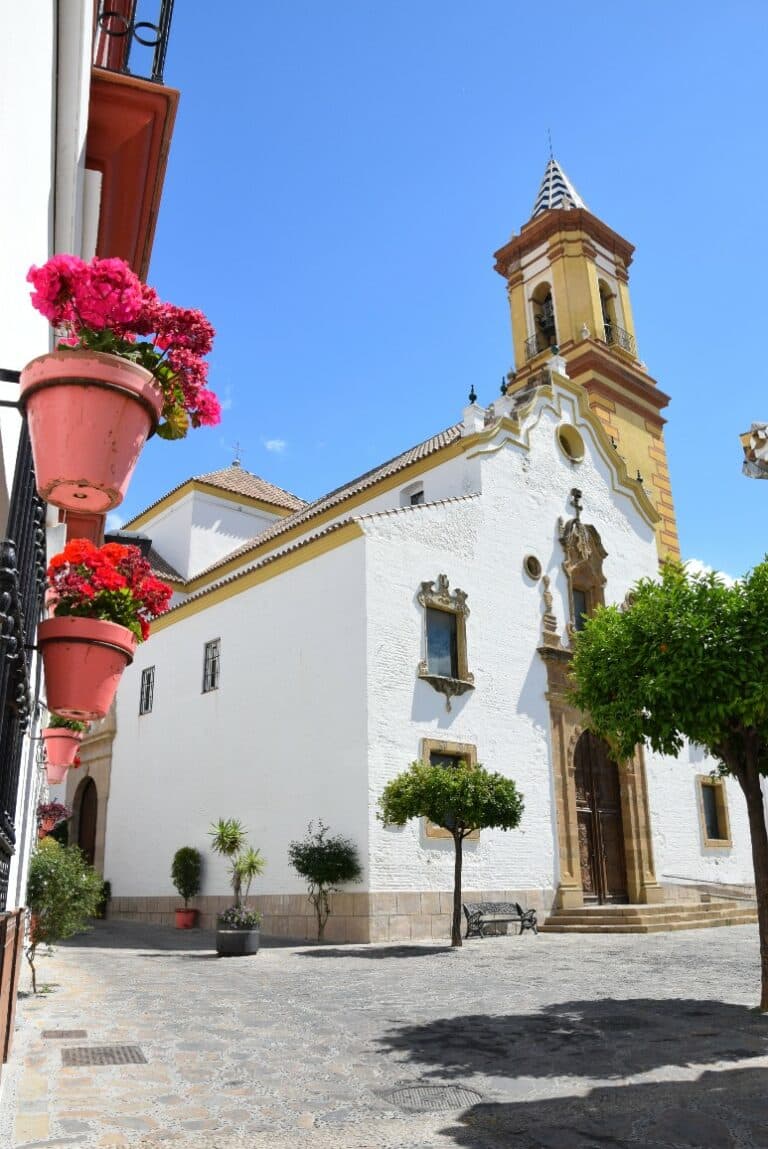
The church's tower is the taller, slimmer one: four bodies stepping inwards, the bell stage already octagonal, crowned by pinnacles of glazed ceramic in two colours. The other one — lower, pink and white, with its little cupola and its clock face — stands some hundred and twenty metres to the south and belongs to a different building altogether. It is the Clock Tower, all that stayed standing of the earlier Los Remedios church when the 1755 earthquake ruined the rest. Two towers, two periods, two buildings. The confusion makes sense in the photograph; it does not survive a walk down the street.
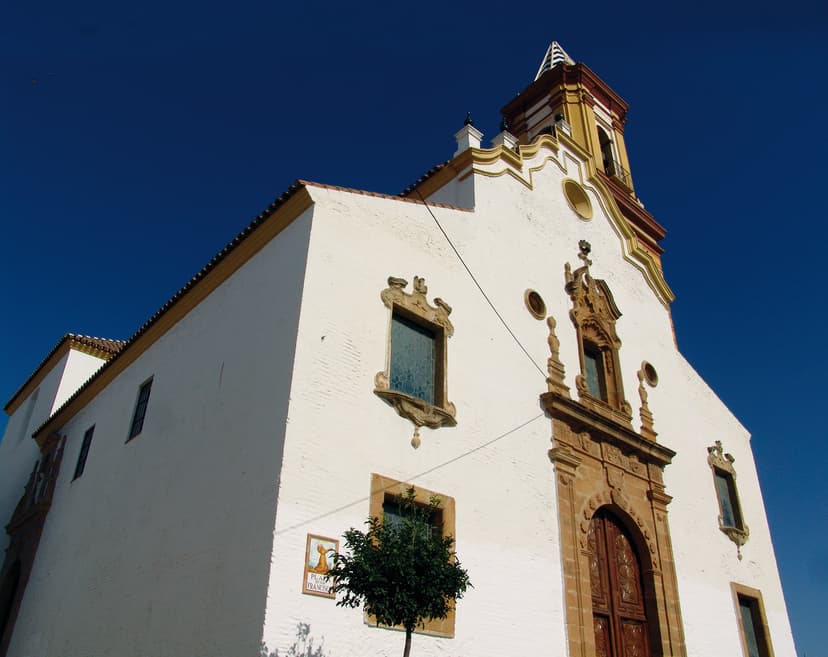
What is documented about the church you can visit today begins in the late eighteenth century. It was raised over the old Veracruz chapel as the church of the Franciscan convent, paid for and largely built by the townspeople themselves. The stone doorway carries the carved date 1772 and rewards a long look: a round arch with the anagram of Mary on the keystone, a window crowned by a trilobed scallop shell, a set of three oculi, and an unusual iconographic mix in which Marian and Franciscan motifs sit alongside others brought back from the Americas. Fray Diego José de Cádiz, one of the most celebrated preachers in the Spain of his day, took part in its inauguration.
In 1835 the disentailment law expelled the friars, and soon afterwards the building became the parish church of Los Remedios, which is what it remains. In 1936 its archive and its artworks were burned: the altarpiece you see today dates from 1993, installed during a deep refurbishment. Which is why the building reads best from the outside in — the eighteenth-century stone is in the façade; the interior is, in large part, reconstructed memory.
Inside is the image of Estepona's Patron Saint, whose August celebration is one of the most important dates in the local calendar. It is open at mass times, with no ticket.
Of what stood here before, no stone and no official document survives: the local chronicle of Manuel Sánchez Bracho records that around 1400 this plot was a pine wood. The council's heritage sources do not confirm it, and we tell it as what it is: the town's written memory, not a verified fact.
Tags
Opening hours
Open at mass times.
Price
Free entry.
Location
Where Iglesia de Ntra. Sra. de los Remedios is
Living history
To understand this place better.
Every corner of Estepona carries a story. These articles tell the stories behind this place.
Urban memory · Siglo XIV – XX
The streets that hold memory
The historic centre of Estepona preserves memory in its squares, streets, houses and churches. Plaza de las Flores had at least six different names depending on the political power of each era. A cistern of Muslim origin survives intact beneath Casa del Aljibe. The Church of Los Remedios stands on the site of a 1400-era forest. Calle Murillo is named after a doctor held captive in Algiers for thirteen years.
Read the articlePortrait of a city · Siglo XVIII
Estepona's 124 fishermen
18th-century Estepona fits into a municipal census: 124 fishermen with traditional nets, vineyards, olive trees, grain and a winepress in every farmhouse. A human-scale city whose economy tourism had yet to invent.
Read the article