Torre del Reloj
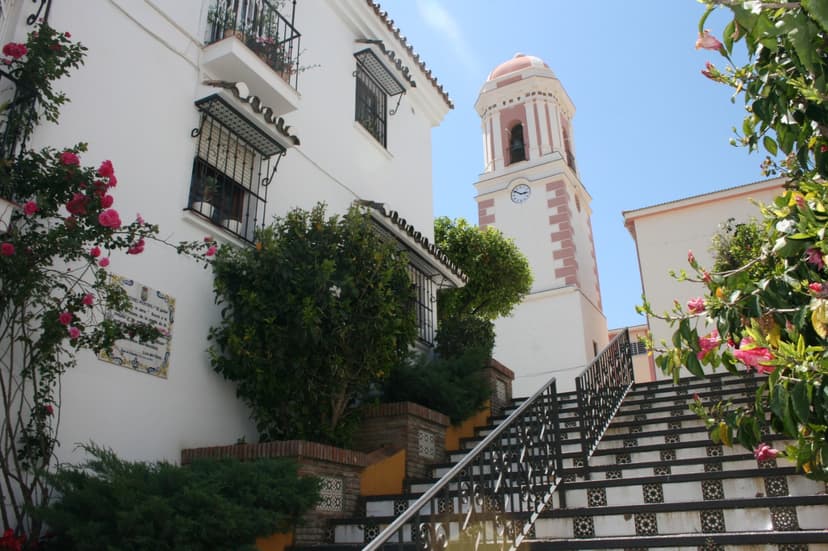
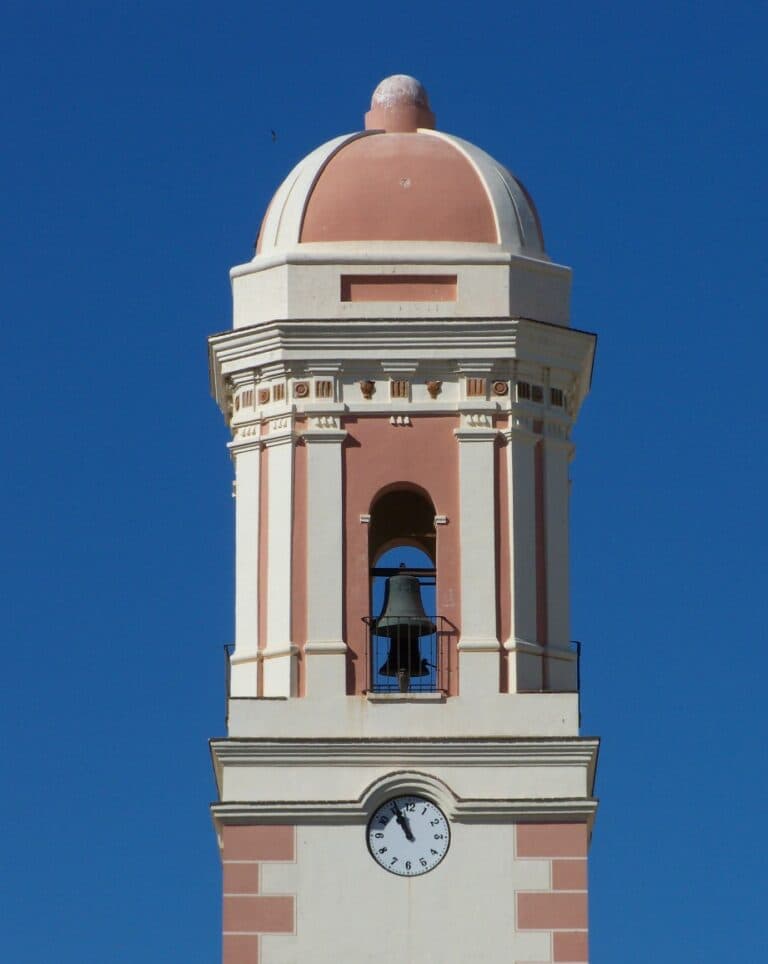
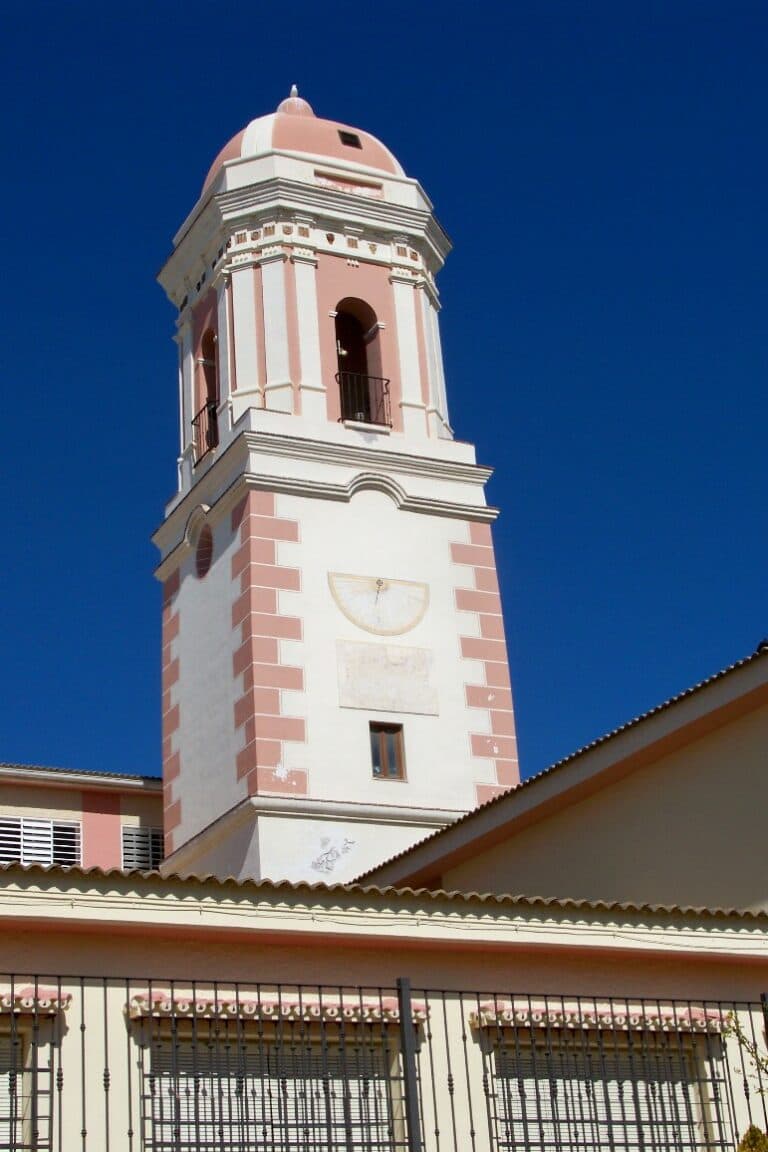
The tower of the old Church of Los Remedios, raised in the sixteenth century. A neoclassical belfry in the eighteenth. A freestanding tower since the 1755 earthquake brought down the church around it. And a clock since the early twentieth. Estepona's most recognisable heritage landmark — visible and accessible without a ticket.
About this place
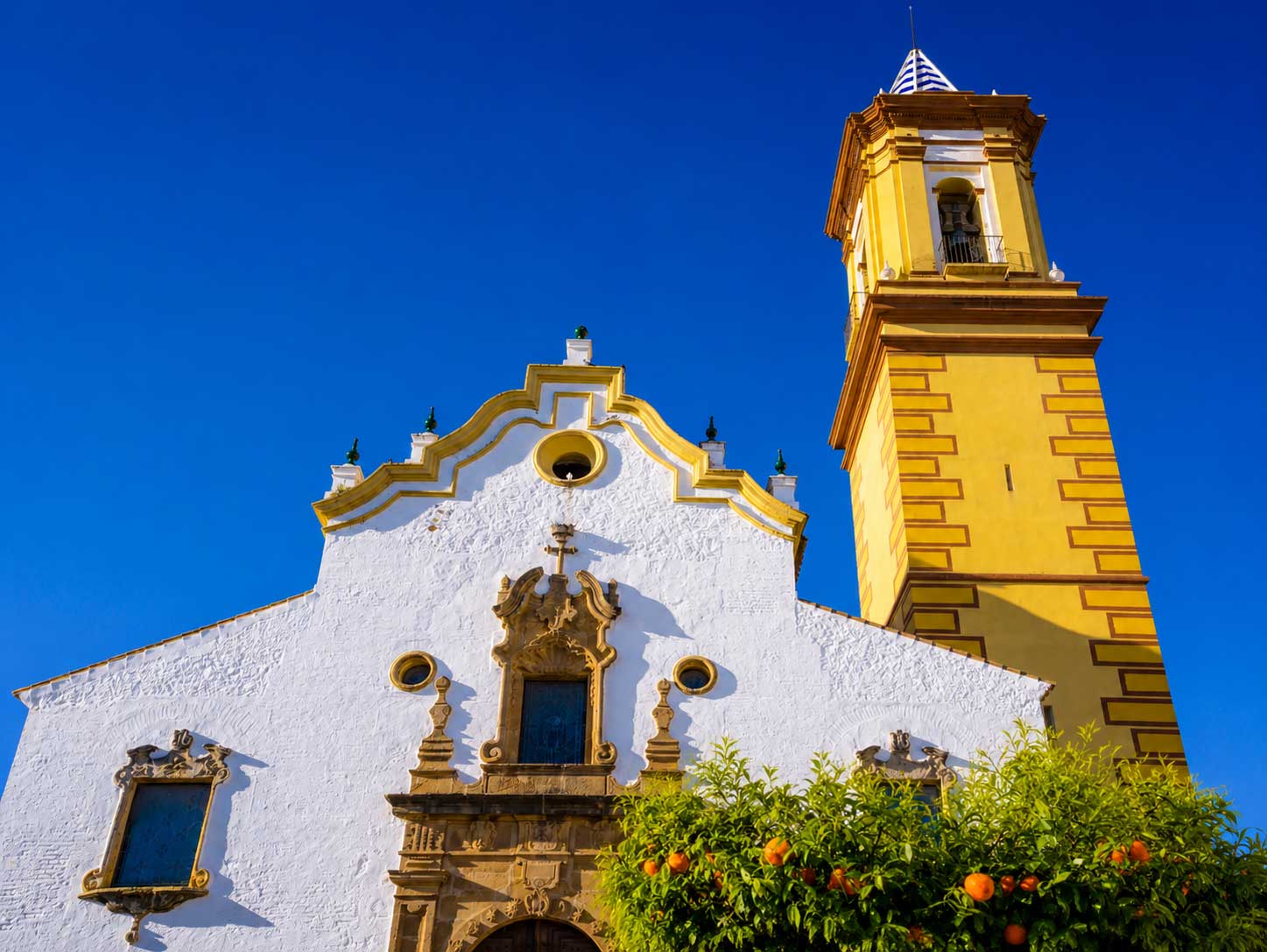
The Clock Tower stacks four eras into a single structure — and none of them is the one usually told. You will often read that it began as the minaret of a mosque: it is a widely repeated local tradition, but the town's own heritage sources do not record it. What is documented is that the Christian settlers raised it in the sixteenth century as the tower of the Church of Los Remedios, square in plan, with the plain look of a defensive tower it has never quite lost. In the early eighteenth century a neoclassical belfry decorated with ceramic was added. In 1755 the Lisbon earthquake ruined the church around it, which was later pulled down, leaving the tower standing alone. And in the early twentieth century the clock that still keeps time was installed inside. On its south face it keeps a sundial — what told the time before. You cannot go in: you look at it from the square, at any hour, with no ticket.
Tags
Location
Where Torre del Reloj is
Nearby, on foot
- Casa del Aljibe — Museo Arqueológico44 m · about 1 min walk
- Remains of San Luis Castle in Estepona63 m · about 1 min walk
- Plaza de las Flores106 m · about 2 min walk
- Ruta Rincones con Encanto106 m · about 2 min walk
- Casa de Las Tejerinas113 m · about 2 min walk
- Iglesia de Ntra. Sra. de los Remedios137 m · about 2 min walk
Living history
To understand this place better.
Every corner of Estepona carries a story. These articles tell the stories behind this place.
Urban memory · Siglo XIV – XX
The streets that hold memory
The historic centre of Estepona preserves memory in its squares, streets, houses and churches. Plaza de las Flores had at least six different names depending on the political power of each era. A cistern of Muslim origin survives intact beneath Casa del Aljibe. The Church of Los Remedios stands on the site of a 1400-era forest. Calle Murillo is named after a doctor held captive in Algiers for thirteen years.
Read the articleDefensive heritage · Siglo IX – XVII
Castles and towers: a coast always on watch
For centuries, Estepona had a defensive system of two castles and seven coastal towers. Castillo el Nicio, of Arab origin from the 9th century, dominated the interior from Padrón Alto. Castillo de San Luis, from the 16th century, stood in the town centre. The seven watchtowers watched over 21 kilometres of coastline. Three layers of defence on the same territory.
Read the articleDigital memory · Año 2000
What InfoEstepona documented in the year 2000
InfoEstepona was Estepona's official tourism website in 2000, created by SIMA with the council's Tourism Office. Over 1,000 HTML files documented the whole city: history, folklore, gastronomy, nature and a practical guide for the international visitor of that moment.
Read the articlePortrait of a city · Siglo XVIII
Estepona's 124 fishermen
18th-century Estepona fits into a municipal census: 124 fishermen with traditional nets, vineyards, olive trees, grain and a winepress in every farmhouse. A human-scale city whose economy tourism had yet to invent.
Read the article