


History of Estepona
What the guides leave out.
Independence in 1729, 124 fishermen of the 18th century, the mayor who built the seafront promenade and the first tourism website for Estepona. Real stories with names, dates and sources.
Browsing by era
Roman era
1st – 6th c. AD
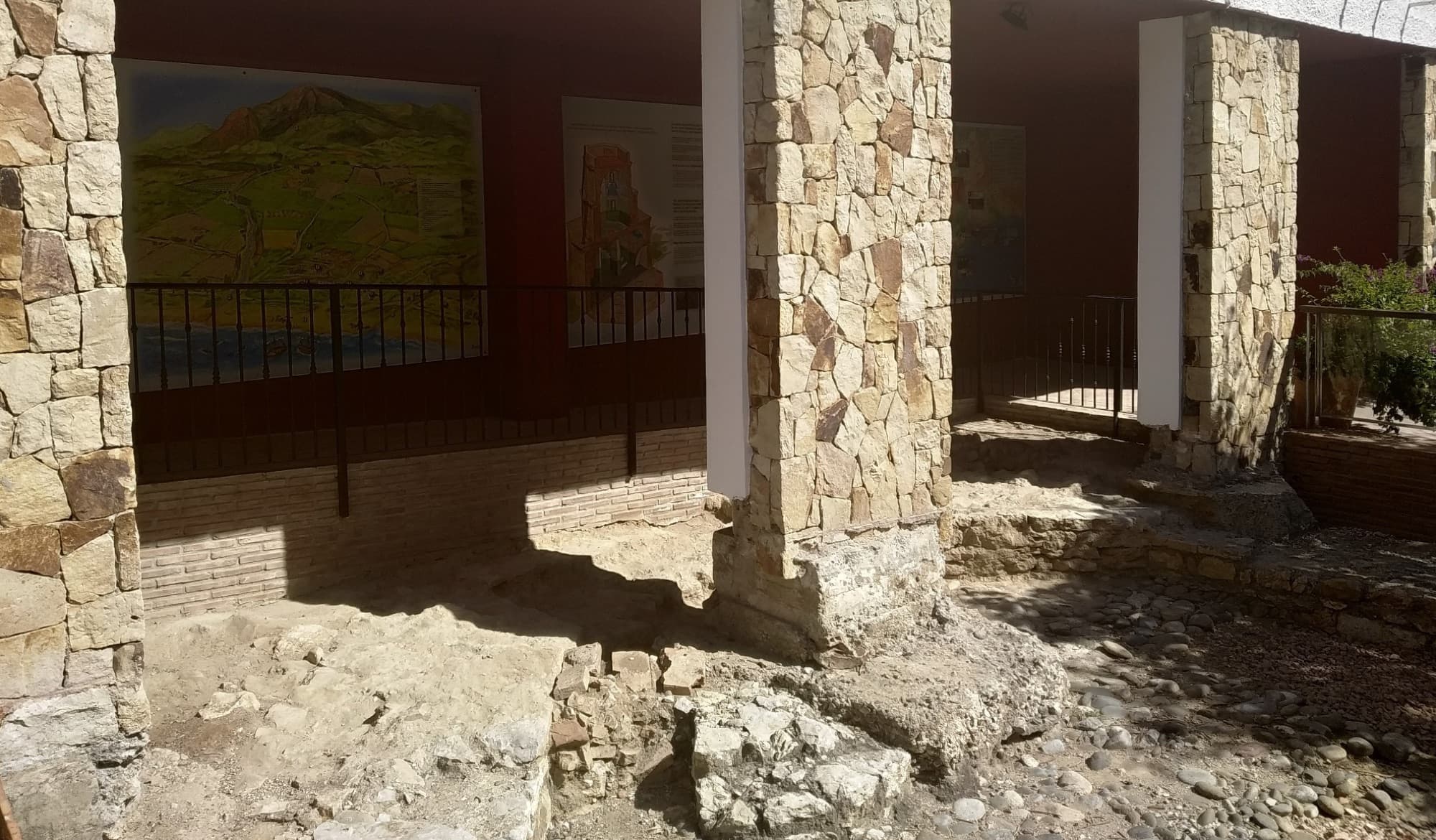
- Siglo IV d. C.Archaeological heritageThe Roman tower nobody has settled: tomb or watchtower?In Estepona's old town, on Calle Villa, stand the base remains of an octagonal Roman tower from the 4th century AD that may have reached at least 12 metres in height. It was abandoned two centuries later, and its materials were plundered at different times — partly during the construction of the Muslim wall, and, in the 20th century, by a decorative fountain. Its function remains unresolved: it may have been a funerary mausoleum or a thynnoskopeion, a watchtower for tuna fishing.
- Siglo I – V d. C.Rome in GuadalmansaThe Roman villa two excavators read in two different waysThe Villa Romana de las Torres is an archaeological site next to the Guadalmansa watchtower, on the eastern coast of the Estepona municipality. It was first excavated in 1915-1916, led by José Martínez Oppelt, and again in 1929, led by José Pérez de Barradas. Between the two campaigns, around 18 structures and five geometric mosaics were recorded, along with marble columns, coins spanning the reign of Emperor Vespasian (69-79) to that of Maximinus (235-238), and a bronze bust identified as Gordian II (238). Martínez Oppelt interpreted the complex as Roman baths; Pérez de Barradas concluded its wealth came from producing garum, the most prized fish sauce of the Roman world. The official decree declaring the site a Cultural Heritage asset, summarising the 1929 findings, describes the complex as "a Roman villa and salting factory" and dates its construction to the late 2nd or early 3rd century AD; the same decree records that soundings carried out in 1990 confirmed the site was later used as a necropolis, after being abandoned. In 2001, an academic campaign led by Ana Arancibia Román for the Junta de Andalucía — combining geophysical survey and a test excavation — confirmed continuous occupation of the area between the 1st and 5th centuries AD, and noted that only a small part of the site has been excavated so far. It has been protected as a Site of Cultural Interest since Decree 122/1996, amended by Decree 181/1999 (BOE-A-1999-23246). It is a different site from El Torreón, the Phoenician-Punic settlement in the same Guadalmansa area.
- Siglo I – II d. C.Rome in SaladaviejaThe Roman building brought down by the ground itself, not by an attackIn 2023, an archaeological excavation at Las Mesas de Saladavieja — the same area where the oldest known Palaeolithic stone tools in Estepona had been documented in 2021 — uncovered the remains of a roughly square Roman rural building, about 14 by 14 metres, built in the second half of the 1st century AD. Its walls, of rubble masonry with some sandstone ashlar bound with mud, were laid out around four interior spaces. Fragments of a rotary millstone and around twenty loom weights (pondera) point to a use tied to processing agricultural and livestock produce. The building was short-lived: it lay in ruins by the late 1st or early 2nd century AD, with no signs of fire or violent destruction, because part of its foundations sat on expansive clay marls that gave way with seasonal changes in moisture. After abandonment, its materials were stripped down to the foundations themselves. The dating rests on tableware pottery — Hispanic and South Gaulish terra sigillata — found in the building's collapse layers. The dig, led by the firm Arqueotectura (César Augusto León Martín, José María Tomassetti Guerra and Cibeles Fernández Gallego) and authorised by the Junta de Andalucía, also recovered an alquerque — an ancient board game carved into the rock — now transferred to the Estepona Archaeological Museum for conservation.
Shared memory
Do you have a memory of Estepona worth telling?
Many stories from this town only live on in family memory. If you have a photo, a document or a real story with a name and a date, write to us.